Network Arrangement
Confirm system voltages, frequency, earthing arrangement, incoming supply arrangement and the required number and function of circuits.
ALBORGRID › Guides › Compact Substation Selection Guide
Start with the network arrangement, load and installation site. Then compare a prefabricated substation with a pad-mounted transformer before confirming MV protection, transformer ratings, LV functions, enclosure and project documents.
A compact substation is a coordinated assembly rather than a single fixed item. Define its role in the distribution system first, then select the architecture and configure every functional section against the approved single-line diagram.
Confirm system voltages, frequency, earthing arrangement, incoming supply arrangement and the required number and function of circuits.
Provide connected load, required transformer capacity, operating profile and any allowance for future expansion.
State indoor or outdoor installation, available footprint, cable entry, access constraints and environmental conditions.
Both serve compact distribution applications, but their construction differs: the YB uses separate MV, transformer and LV compartments, while the ZGS13-H integrates MV switching and fuse protection with an oil-immersed transformer.
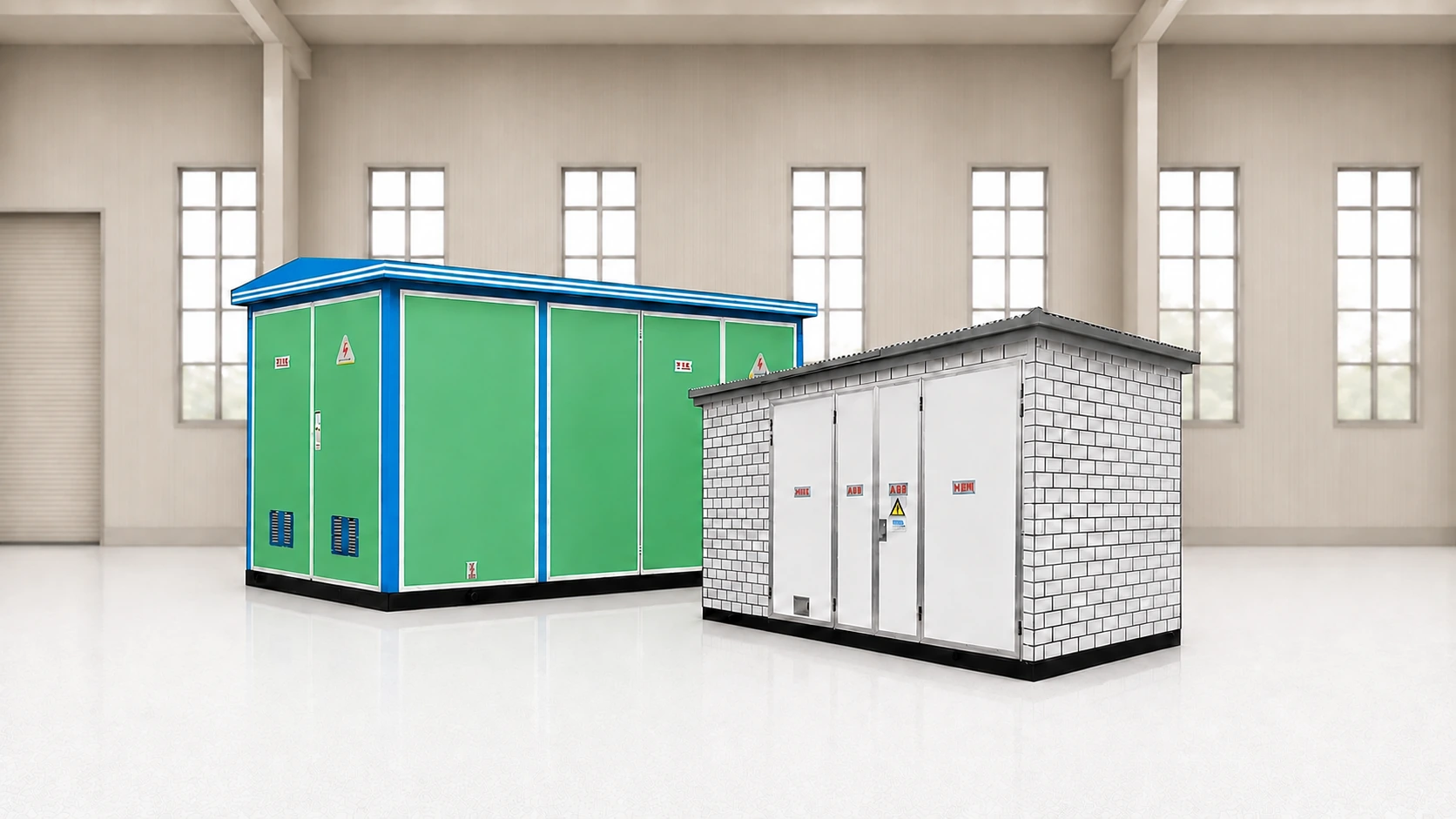
Separate MV switchgear, transformer and LV distribution compartments are coordinated inside one weather-resistant enclosure. The current product range supports MV up to 12 kV, LV at 0.4 kV and capacity up to 2500 kVA.
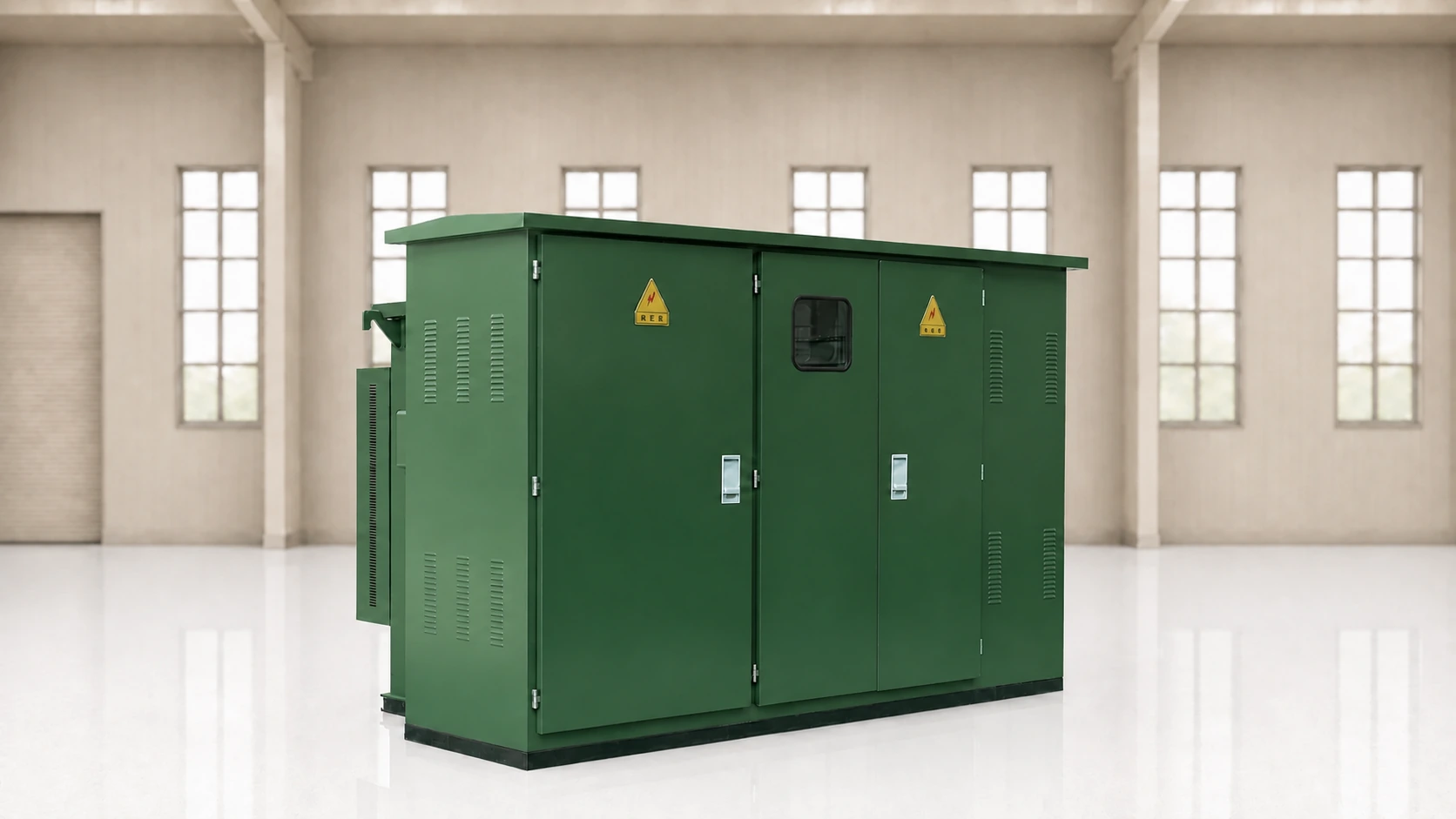
MV load-break switching, fuse protection and the oil-immersed transformer are integrated in a compact combined assembly. The 12 kV family supports terminal, ring-network and dual-source supply arrangements.
| Selection Point | YB Prefabricated Substation | ZGS13-H Pad-Mounted Transformer |
|---|---|---|
| Architecture | Distinct MV, transformer and LV compartments in one enclosure. | MV switching, fuse protection and transformer integrated in one compact assembly. |
| Transformer | Oil-immersed or cast-resin dry-type options. | Integrated oil-immersed transformer. |
| Supply Arrangement | Configured against the approved project SLD. | Terminal, ring-network or dual-source arrangements. |
| Main Design Focus | Compartment layout, transformer type, enclosure, MV protection and LV feeders. | Supply arrangement, load switch, fuse protection, transformer parameters and LV functions. |
| Useful Starting Point | Projects needing distinct functional compartments or a dry-type transformer option. | Projects suited to a compact combined pad-mounted architecture. |
This comparison identifies the suitable starting family only. Final voltage, capacity, switching duty, protection, dimensions and compliance requirements must be confirmed against the approved project specification.
MV switching, transformer capacity and LV distribution must be reviewed together. A change in one section can affect protection coordination, layout, ventilation, cable interfaces and the overall enclosure.
Confirm voltage, frequency, supply arrangement, circuit duties, rated current, fault level, switching, protection and interlocking.
Confirm capacity, winding voltages, construction, taps, connection and the project-specific operating conditions.
Define the main incomer, feeder quantities and ratings, metering, compensation, control and communication functions.
Coordinate compartment layout, cooling, access, foundation, cable entry, lifting and transport constraints.
Need to refine the transformer construction first? Open the Transformer Selection Guide ›
Do not assume one standard outdoor enclosure is suitable for every destination. State the site conditions before the housing, ventilation and civil interface are confirmed.
A complete enquiry allows the MV arrangement, transformer, LV distribution and enclosure to be reviewed as one package. Include the destination, applicable standards, SLD, voltages, frequency, earthing, load or capacity, circuit schedule, fault data, site conditions, civil interface and required document language.
Send the destination country, SLD, system voltages, load or capacity, supply arrangement, installation conditions and required documents. We will review the system requirements and recommend a suitable starting configuration.